Tuesday, 6 October 2026

Solving Word Problems

Teachers always ask about word problems. Students tend to pick out the numbers from a word problem and do "something" with them using key words. Starting with numberless word problems can help students engage with one another and eventually solve the problem. 

See this website for more information on how to use and a whole bunch of examples. 

https://numberlesswp.com/


Tuesday, 14 April 2026

Reviewing for the NAP Year-end Assessment (Baseline)

Reminder: the year-end assessment (formerly the baseline) is a celebration of all their learning and should be presented as a great opportunity to showcase everything they know. Remind them that all outcomes will be assessed, not just the 10 questions from the foundational quizzes. One way I had students buy in was by saying, "This is hard, and therefore it will be the end of regular math classes for the year, and we will be celebrating once everyone has written it." (ideas - no more math, math games, outside time, pizza party, ice cream) 

To prepare students for the year-end assessment, you should plan for at least 2 weeks of consolidation of learning. You want to plan activities, games, or projects that review all covered outcomes. This consolidation of learning can be any review you want; ideas are listed below. 

Click your grade level above for files to help with the ideas below.

Ideas: (taken from NAP 2.0 Session 4 year 1 of training)

Click your grade level above for an editable turn the tables template. 


Summative Reviews use a text book and pages to practice - see your grade level above. 


Wednesday, 3 December 2025

AI and Math

 If you are interested in using AI to enhance your lessons, practice and assessment. Check out this podcast - it has some amazing ideas. Dr. Nicki Newton is the guest on the Making Math Moments podcast. 


Making Math Moments Podcast


Here is the episode description:

Here’s what you’ll walk away with:

  • A ready-to-use AI prompt structure that enhances math lesson plans, questioning, and scaffolding—especially for multilingual and neurodiverse learners.

  • Ways to use AI for deeper math assessment analysis, moving beyond surface-level data to guide instructional next steps.
  • Real examples of AI transforming dull topics into engaging math mysteries, routines, and riddles that excite students and inspire teachers.

Monday, 6 October 2025

Self- Checking Loop cards

Use these cards to practice after instruction. They ensure students do not have misconceptions and don’t practice questions incorrectly. 


Create your own cards.   FREE recording sheets, click here


Cards: Choose how many cards to create. 

Print Size: How many cards per page.

Topic: Choose from 170+ different topics 

New Cards: Click to create cards

Print Cards: Print

Min. Difficulty: Set lower to make easier questions

Max Difficulty: Set harder for harder questions

Continuous Loop - set so kids can enter at any time. 

Print off task card recording sheets and have students show their work. Free at the top of this post.

Friday, 3 October 2025

Review and Reachback Games

If you are looking for a fun way to review a concept, review for a test or do a fun reachback activity, see below for a variety of once-a-week/once-a-cycle reviews. 


100 Square challenge

Capture the Flag


Trashetball, Sink or Swim, Grudge ball, Colour Jenga


Thursday, 17 April 2025

Resource Gathering Request NAP Foundational Outcomes - Teaching Ideas

 As part of the NAP program, I want to start gathering resources for the foundational outcomes for each grade level. If you have an activity, work and just general ideas for one or more of the concepts, can you send me a message with it explained.

tkingdon@rrsd.mb.ca 


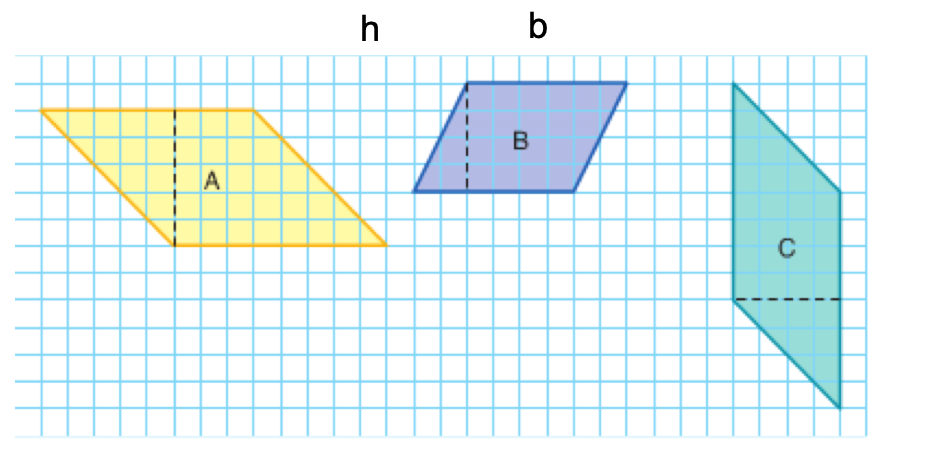
For example here is an example for Grade 7 SS2 to activate for parallelograms:


Wordle Puzzle for Education

For those of you who also teach language! Here is a site shared by one of my visitors.

https://wordler.net/games/classic?lang=en 


Tuesday, 13 August 2024

Ideas for Collaboration/Problem Solving and Alternatives to Traditional Paper Pencil Activities

 Building 21st Century Skills

   See previous posts on Building Thinking Classrooms - Peter Liljedahl and Number talk activities.

Alternatives to Traditional Paper Pencil  Activities

1. Self-checking task cards, placed around the room. Students can start anywhere, solve, and then look for the answer on top of another task card. Pros - students are moving, teachers can provide assistance, students know immediately if they make an error and work on finding their mistake. Search for looping cards.

2. Partner whiteboard work - both partners solve the question on their whiteboard and then compare their work and answers.

3. Technology - lumio lessons, desmos activities, Geogebra and quiz-type games(Kahoot, Blooket, Gimkit, Quizizz)

4. Puzzles and games. Ideas Tarsia puzzles, matching puzzles, card type games

More to come.....


Monday, 13 February 2023

Video Lessons

 Number Rocks - math videos 

Grades K-8!

https://numberock.com/video-library/


Math Antics - check out some sample videos on YouTube.

Number Talks

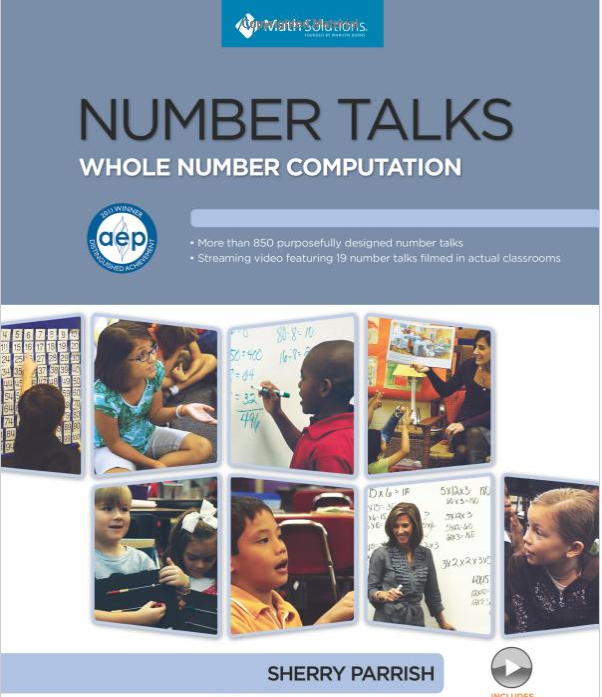
Number talks are one of those things that I think every math teacher should be doing from K-12. In short number talks are a  a 5-10 minute daily routine that focuses on student talk. Teachers provide thoughtful chosen questions based on strategies or topics being taught and then students share the ways they solve them. There are a couple of awesome resources available for teachers to use when thinking of starting the number talk routine in their classroom.
There are also a variety of videos on youtube that show how a number talk works and how it looks in a variety of classrooms. Here is one example below:


Some valuable information I have found is that you need to set up a safe classroom climate in your classroom and ensure students feel that accepting safety so they will share the variety of their ideas. You also need to do them everyday and you see improvement in number sense and their mental math abilities. I suggest to teachers to do 4-5 days of number talks and then ask students to share in writing rather than out loud so you can assess what students are doing for mental math strategies. You can use whiteboards or as an exit slip.

Here is another youtube video from the author Sherry Parrish - it's just over an hour but I think very powerful!


Good Luck with your number talks - please feel free to comment below with your successes, questions or comments.


Check out this blog post from Anthony at Mashup Math 


Sunday, 12 February 2023

Numeracy Routine

 Who is the spy?

https://games.thinksquare.com.au/tools/spy/daily


Check back to the website for daily puzzle to get your students talking and using math vocabulary. 

Friday, 31 January 2020

NEW - More Number Talk Ideas

I came across another couple of amazing web sites for ideas to build number sense. So I am calling them Number Talks as well - the best use of the first 10 minutes of your math class to get students talking mathematically. Here are the links to the web sites where I found all the awesome ideas:
 http://teachers.wrdsb.ca/some7and8mathresources/resource-dashboard/number-talks/


 https://visiblethinking.weebly.com/daily-routines.html


Here is some more information about some of the ideas from the above posts:

1. Estimation 180 - http://www.estimation180.com/

On this web site Andrew Stadel has created visual images to help with building estimation skills. Students are asked to make an estimate that is too low and too high then an estimate and here is where the discussion can take place..why? I think this activity would work with students in Grade 3+. I used it in my grade 5/6 classroom and found it very engaging! Here is an option for the K-2 classrooms: https://visiblethinking.weebly.com/daily-routines.html

2. Number Strings - very similar to the number talks I shared in my last post. Here is a great post and a video of using these in grade 4. https://numberstrings.com/2016/01/06/a-multiplication-number-string-for-fourth-grade/
There are also a number of books from Cathy Fosnot's Context for Learning series. https://www.heinemann.com/contextsforlearning/
Number strings can be used in grades K+ (K-1 can used dot images, ten frames and rekenrek's)
Dot patterns for K-2 https://drive.google.com/file/d/0B3RT0ngxX4Q-WUh4UVBWdnc0a3c/view

Number talks/strings for K-7 https://drive.google.com/file/d/0B3RT0ngxX4Q-R2ZHU1JnTWFJdzA/view

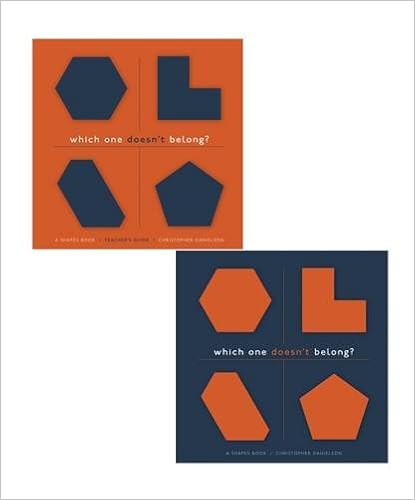
3. Which One Doesn't Belong - there is a web site as well as a book for younger students. In this activity, the teacher shows 4 images and asks for a reason why each one of them do not belong. Great discussions using mathematical vocabulary happen! Check out the web site - http://wodb.ca/
Also have a look at the book by Christopher Daniels - it comes with a teacher guide as well!

4. Visual Patterns http://www.visualpatterns.org/

We know patterning, extending and coming up with an equation based on a pattern is something kids need a lot of practice with. On this web site Fawn Nguyen, has gathered a number of patterns for you to use as a quick beginning of class number talk. 
Here is a link where Fawn describes how she does her pattern talks.
http://www.mathtalks.net/teachers.html


5. Would You Rather http://www.wyrmath.com/
Another way to start your math class is with a would you rather picture. Most of the ones I have seen are for older students. Grades 5+ An example of a would you rather is below:

6. Fraction Talks - http://www.fractiontalks.com/

https://mathforlove.com/lesson/fraction-talks/
I found two different web sites that you could use in grade 5+ for fraction talks. Very similar to a number talk - but you are using fractions!

7. Same or Different - https://samedifferentimages.wordpress.com/
Encouraging math talk during your math class.
For all students even our youngest students to learn how to talk about various features of mathematical objects – quantity, shape, color, orientation, and arrangement, to name a few.

8. Splat - http://www.stevewyborney.com/?p=893 This web site has an incredible amount of pre-made power points for you to use as a warm up activity in your math class. The video below explains what a splat is and the link above takes you to Steve's web site.


Solving Word Problems

Teachers always ask about word problems. Students tend to pick out the numbers from a word problem and do "something" with them us...